Rachael has spent several nights in mental health wards. Watched 24/7, confined to a room, spoken at not with, the gradual stripping away of choice and dignity. She also knows it doesn’t have to be that way.
Through Integrity Initiative, the lived-experience charity she founded, she’s putting humanity back into the system: delivering care packages that pair material basics with accessible rights and mental health information, alongside lived-experience-led workshops, community events, projects and advocacy. We sat down with Rachael to talk dignity, human rights, mental health, and why nobody is broken.
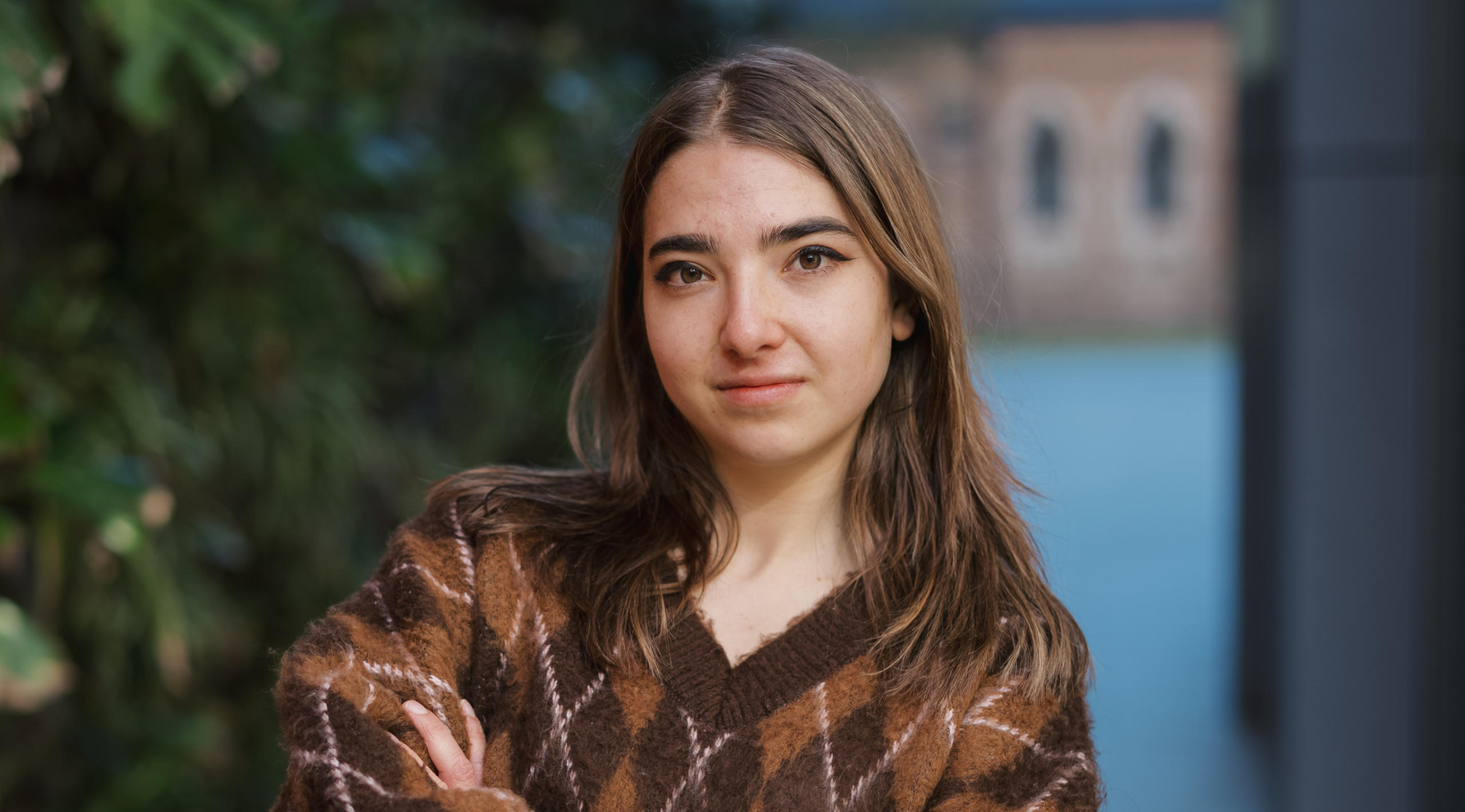
Rachael Burns, Founder and CEO of Integrity Initiative
Mark Davis, National Partnerships Director at Today
Tell me about yourself, leading up to Integrity Initiative.
I grew up in relative privilege and for the most part my childhood is happy memories. Around ten, I started experiencing mental health challenges for the first time—dissociative episodes, OCD—but I didn’t have the language for any of it. I just thought I was weird, but I found a way to live with it. By high school I was very academic, and I’d found my identity in being able to study and get good grades. I was in the gifted and talented program, which I now have qualms about.
Was it the learning itself, or something else?
It started as the learning, then it became that I was good at it, and it became my identity. It was “What grade did Rachael get? What was the top score? Was it Rachael?” There was a lot of pressure. Not from my parents or family, mostly from the school and from my own expectations of myself. While I was becoming more and more focused on academia, I was ignoring the mental health challenges I was experiencing, and I developed an eating disorder that just spiralled and got worse. My parents knew something was wrong; I did too (to an extent), but I didn’t care. I was used to it. It wasn’t until I became really physically unwell, in Year 10, that I was first diagnosed and admitted to hospital. From there, my life completely changed. I spent about two months in intensive treatment. By the time I was discharged, it was time to go into Year 11.
Coming out, did you feel you’d been “fixed”?
In my naive brain, yes. I thought, “I’m better, I’m never going back, I’m out.” And that’s what I was led to believe. It’s also the system of care I was in. With eating disorders, it’s very much: you go in, you get fed up, you get discharged, and that’s it. I found myself lost in a very medical model. I was re-fed and returned.
That language, “fed,” “re-fed”, is confronting to hear.
Family-based therapy, the gold-standard for adolescents with anorexia nervosa, is a huge part of my story. My parents were essentially tasked with being police officers, monitoring everything I did. I lived in that for six months while doing my ATAR—chemistry, maths methods, English, human bio, health. I loved those subjects, so it was easy to absorb myself in them, but I also hated the prison of achievement. It was that academic version of Rachael again—comfort in being top of my classes, even though physically I was slowly deteriorating and mentally I was living a lie. I was playing an act: “I’m better,” and everyone believed me. My grades stayed great, but after the first round of exams my physical health really wasn’t, and I had to go back to hospital. That admission was deeply traumatic. From there I cycled in and out of hospital for the next 6 to 12 months.

Was that admission more traumatic because of the return, or because of the system itself?
Both. The system, and the fact that I thought I was free of it, only to find myself back in my version of hell. I experienced several forms of restrictive practice. It completely changed who I was and my view of the world. At 17, I experienced and witnessed things no human should. A lot of it is a blur because it was so traumatic. All my friends were doing their ATAR, and I was still studying in hospital—12-plus hours a day—when I was literally dying. I look back and think, “Rachael, you don’t need to study for your human bio test.” Eventually I had to drop to general, not entirely by choice but because physically I couldn’t continue. As someone who taught myself organic chemistry from a hospital room whilst doctors told me I was too unwell to concentrate (and did damn good at it), that was offensively easy. But it was also the reprieve I needed. I got myself to a place where I was well enough to avoid hospital, largely because of the trauma of not wanting to go back.
So your whole being was working out how not to have that experience again.
I’m very good at making things work, so I found a way to stay just well enough to avoid hospital and stay in the community. I did that for years, until I found the peer space. “Peer” means lived experience, people who’ve lived through mental health challenges. My first encounter was through Luma, a community health organisation. They had a peer group, and I found it really helpful. The only thing I’d ever found supportive, where I didn’t feel like a burden. From there I found lived-experience advocacy, and I entered what I call my “serial advisory group” phase—applying to every advisory group that opened up, going to every event I could.
The groups led to me seeing myself in peer work for the first time, and there were lots of little bubbles of opportunity as I threw myself into the world. I went to the first Disability Pride Festival and saw people stim—express energy publicly, without shame—and that was huge. I thought, “These are my people”.
When did Integrity Initiative come into being?
There’s no clear timeline—it was building connections and confidence through advocacy, and drawing on my experiences in hospital of being dehumanised. You used the word “dignity” when we first spoke—the lack of dignity, the loss of autonomy.
The reality for most people I’ve met in mental health services is an experience of a complete lack of dignity. The things that make you you get stripped away—all your choices, all your autonomy, all your humanness—being punished, monitored and controlled for such a long period of your life. Even out of hospital, with my parents controlling and monitoring, that was normal for us, and to an extent still is. It’s completely changed relationships in my life, and my ability to trust people. In the wards, you see people waiting hours just to access a toothbrush, wearing see-through paper clothing, having to ask for things that should have simply been given—all while they’re already at an absolute low point. So I had this idea sitting in the back of my mind for years, “I’ll make care packages at some point.”
The things that make you you get stripped away—all your choices, all your autonomy, all your humanness—being punished, monitored and controlled for such a long period of your life.
Was that the idea—bringing some brightness into those challenging moments?
Yes. But the other part of this, is that the care packages are an easy way in when we talk about giving presents, but they’re also about giving people information about their rights and how to advocate for themselves. Each package combines material basics—comfortable clothing, toiletries, basic personal items—with a little hand-stitched felt heart and a resin frog, little reminders of humanity. And it also includes information about their rights: the Australian Charter of Healthcare Rights, what to expect from care, and tools for effective communication and mental health literacy.
It’s a reminder that they’re human, that someone outside sees them, that there’s a world out there. I don’t like the phrasing of “hope”; instead it’s a reminder that there is more, that you’re not broken. That’s what Integrity Initiative exists to say: you are not broken, you are not the problem, what you’re experiencing is understandable, and you’re allowed to exist as you are. I try to write a letter in each package, but it’s all co-created with a clinician or a nurse.
Stepping back, care packages are one part. Tell me about the rest.
It started with care packages, and it’s grown into something huge. The spiel: Integrity Initiative is a lived-experience, soon-to-be-registered charity, working to cultivate autonomy, dignity and human rights in mental health conversations. There are three branches. The first is the care packages, Caring with Integrity.
The second is workshops: creative, interactive sessions for any audience—clinicians, communities, carers—across a range of topics. One is called Integral Language, about respectful, best-practice language in mental health conversations. My favourite is Dignified Decision-Making, which is best suited to wards. It’s about how we can allow people choice and autonomy even in really difficult situations. The third branch is community events and advocacy campaigns.
I also made a documentary last year called Unfiltered, alongside Lily Gresele—Founder of How To Be Well—about what accessibility is and how we can make workplaces and communities accessible from lived-experience perspectives.
It’s a reminder that they’re human, that someone outside sees them, that there’s a world out there. I don’t like the phrasing of “hope”; instead it’s a reminder that there is more, that you’re not broken. That’s what Integrity Initiative exists to say: you are not broken, you are not the problem, what you’re experiencing is understandable, and you’re allowed to exist as you are. I try to write a letter in each package, but it’s all co-created with a clinician or a nurse.

When you talk about accessibility, is Integrity Initiative intersectional?
Absolutely. So many services work in silos—one addresses mental health, another homelessness, another LGBTQIA+ rights. Integrity Initiative really embraces intersectionality. Most people on my team have deeply intersectional experiences: it’s not just mental health, not just an eating disorder, not just OCD—it’s also disability, neurodivergence, queerness, all of it colliding.
I highly recommend Kimberlé Crenshaw—intersectionality is essentially her work; she’s an African American women’s rights activist.
Integrity Initiative is completely lived-experience led, at every stage—the “nothing about us without us” principle from the disability movement—while also working alongside clinical perspectives, allied health and research.
We’re always better in collaboration than we are separate. The other key pillar is the humanness of mental health. Mental health is something we all experience, and mental health challenges are, most of the time, an incredibly understandable and human response. Wedon’t always need to pathologise it.
Over the last few years I’ve come to see that everything I experienced makes sense—it was all a completely understandable response to what I was going through. Rather than pathologising, diagnosing, and assigning something that can be labelled, filed and coded, let’s let it be human, because we’re complex, messy human beings.
It’s about being real. Sometimes things are shit, and it’s allowed to be—you don’t have to cover it with a bow.
Acceptance of what is seems like a big part of moving through it. So—what does a great next 5 to 10 years look like? Say the funding comes: what does that allow?
It allows me to actually do this work as a profession. Right now I’m doing 50+ unpaid hours a week and paying for a storage unit out of my own savings. That’s not sustainable. I’ll do this work to my own detriment—but to be taken seriously as a professional, I need funding. I want to dedicate my whole being to it, instead of working a million external jobs—paid work, advisory groups, councils, committees—just to bring in some income. I really want to scale it and have a paid team.
In WA, there are a lot of rural areas that I would love to reach more. I did a trip to Albany earlier this year: 8 days, 165 care packages, 26 contact hours of community events, 11 community events and 5 custom workshops. That effort was possible with three grants combined and it wasn’t paid.
There’s a real call for funding, both to keep doing the work and to scale it—all the hospitals need these care packages, and we need to deliver workshops weekly. We have the proof we need it, yet we don’t have the funding.
My heart will always be in acute mental health settings, but we don’t only deliver to mental health settings, or only to hospitals. Once we are full registered as a charity we will be able to do more work in crisis accommodation, education, sporting clubs, social groups…you name it. The models used in youth mental health are very hope, positivity and inspiration-heavy, and that’s not what Integrity Initiative is.
It’s about being real. Sometimes things are shit, and it’s allowed to be—you don’t have to cover it with a bow. Shit with glitter on it is still shit. It comes back to existing, to humanness, and to the idea that people fundamentally are not broken. That’s what it all comes back to.