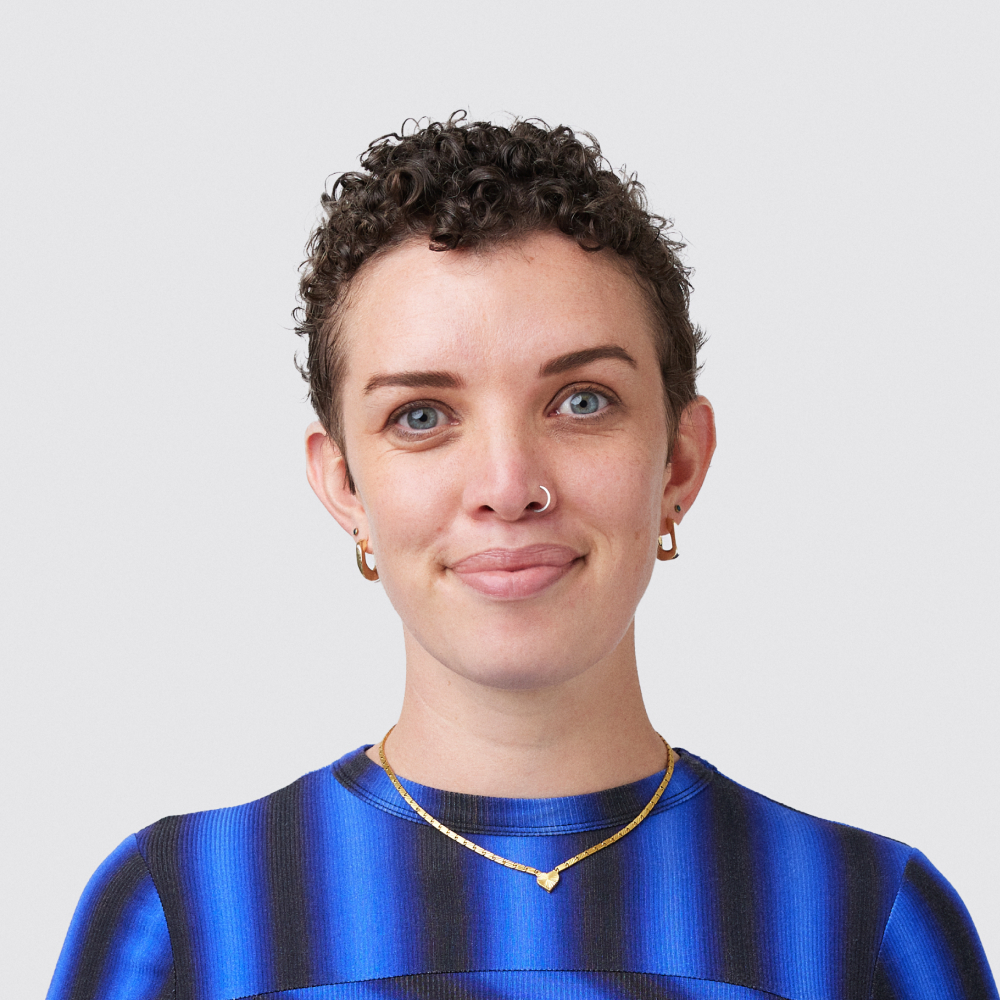
Jenna Tuke didn’t set out to lead—a lifetime of activism, frontline sexual assault work and queer feminist politics is what got her there. As CEO of Switchboard, she’s steering the organisation through a sobering rise in anti-LGBTIQA+ violence, standing up a new helpline for people targeted through dating apps, and holding onto joy and fury in equal measure. In this interview, Jenna talks power, protest and what it means to lead by community, for community.
Jenna Tuke, CEO of Switchboard (she/her)
Athalia Foo, Brand and Content Strategy Lead at Today, (she/her)
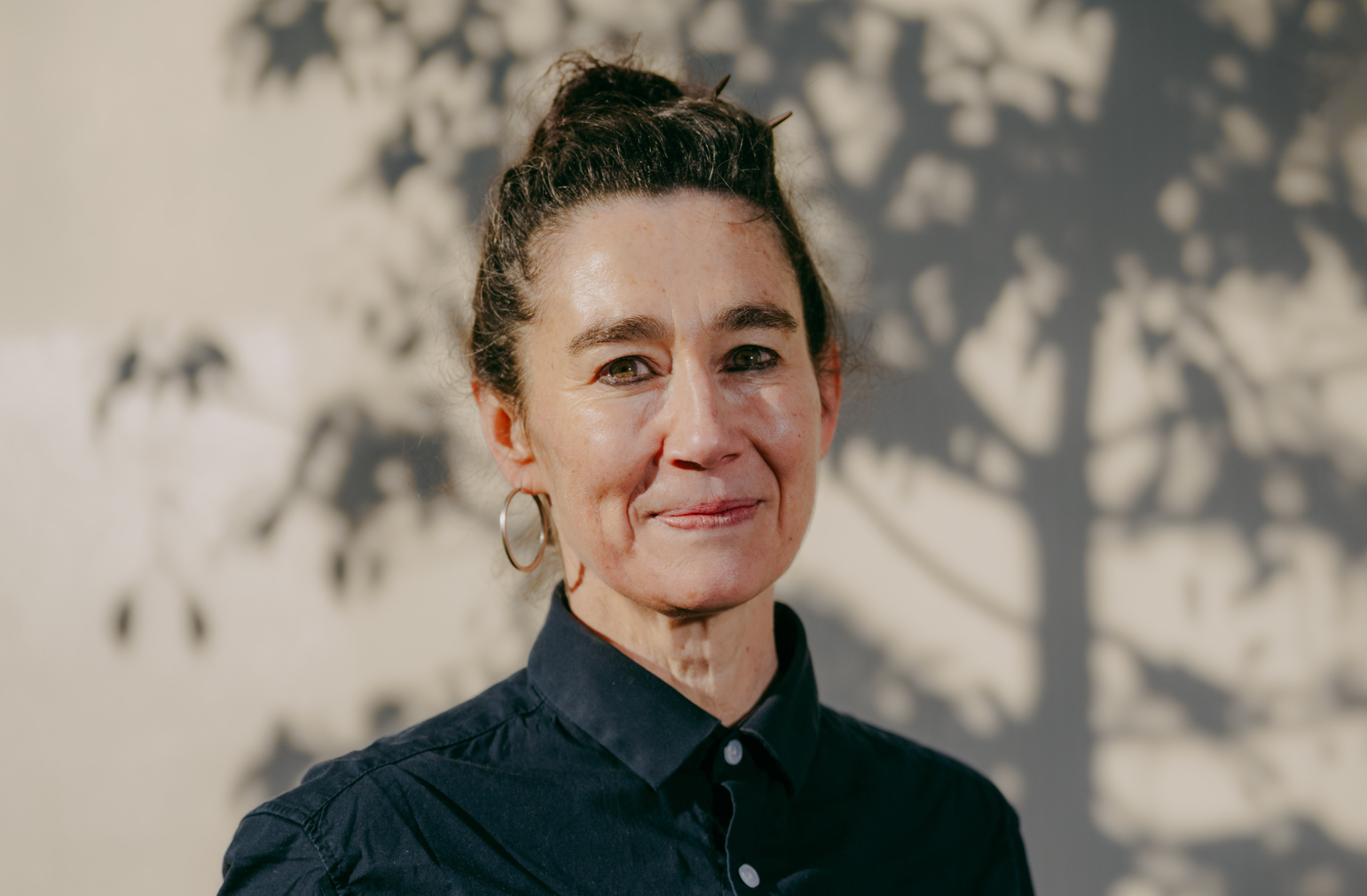
I’d love to hear more about your journey. What led you to become CEO of Switchboard?
This journey probably began as a fierce environmental activist in my twenties—arrested left, right and centre. I spent a lot of time with the anti-nuclear movement and I was also involved in refugee advocacy. At some point, after finishing my Arts Degree, I recognised I’d probably need to get a job and earn some money, and I knew that I loved working with people—it gave me meaning.
I started as a volunteer, doing a volunteer training course at WIRE, the Women’s Information and Referral Exchange. That was my first step towards this kind of feminist, queer political work with people and systems. I loved it, and volunteered for a couple of years at WIRE . I then did a social work degree, and worked at the unplanned pregnancy and abortion service at a women’s hospital. I then moved to work in sexual assault services where I stayed for close to twenty years. I spent my formative years as a practitioner at CASA House, at the Royal Women's Hospital, and also worked with kids who’d experienced sexual assault and child abuse at the Gatehouse Centre.
Doing that work with survivors, I became deeply committed to a feminist practice that recognises the profound implications violence can have across every domain of someone’s life—social, psychological, emotional, physical, relational, developmental, educational, career, housing security. My original title was “Counsellor Advocate,” which captures it well: providing counselling, but also recognising that the ways in which systems and structures respond to a survivor is pivotal to their recovery. Back then - counselling and advocacy were the framework. I advocated with police, courts, schools, and workplaces to ensure systems were actually responding to survivors’ needs. I learned a lot in those early years about the importance of system responses.
I did a lot of therapeutic training, and I never really imagined myself in leadership as I loved the front-line work with people – the leadership just kind of just happened. I was an experienced, competent practitioner who enjoyed supporting and mentoring people who were new to the work, and I found myself moving into more senior roles. About fifteen years ago, I took my first senior leadership role, moving into service management, system reform and advocacy. I’ve maintained my therapeutic practice throughout, because I love it, and because staying connected to the reality of people’s lives makes me a more effective leader—both as an external advocate, and in thinking about my obligations to my staff and volunteers, particularly under the new psychosocial safety regulations, to make sure we have a safe workplace for people doing work that can be really impactful on individual wellbeing.
In 2017 I’d just left a senior leadership role in child and adolescent mental health—working in that clinical framework was never really my natural home, though I learned a lot. I’d also had a friend die, and then my father, and so after years in big, hard jobs within the system I resigned from big organisations and formal roles within the public health system. I spent a while working part-time in private practice and took some space to breathe and be. After a while I realised that therapeutic work alone wasn’t enough for me—I missed being part of an organisation with a greater political purpose and an advocacy frame.
So when what looked like a small job doing group supervision for Switchboard’s volunteers came up, I took it, thinking it would just keep me a bit connected to advocacy work. Six weeks later, the marriage equality plebiscite was announced. That debate about the legitimacy of queer lives and relationships had an incredibly harmful impact on so many people in the LGBTIQA+ community, and Switchboard flexed up enormously. We took on a lot of extra volunteers, and demand for our QLife phone support increased hugely. It was an intense, meaningful experience of working closely with community to support community.
About a year later I took the role of Managing the sexual assault service at The Women’s and I was invited to join Switchboard’s board, which I did in 2020 - and was a volunteer board member for four years. Over that time, Switchboard grew enormously under the visionary leadership of our previous CEO, Joe Ball, who’s now the Commissioner for LGBTIQA+ Communities in Victoria. In 2017 Switchboard had five part-time staff members and 100 volunteers; by the time I became CEO in 2025, we had 60 staff members and 7 programs. We’d had great support from a Victorian government that was genuinely investing in LGBTIQA+ communities and the queer sector at that time.
So I have this extraordinary opportunity now, as CEO, to bring more than twenty-five years of experience in advocacy and leadership on behalf of our communities, while also managing services. We run two helplines, including QLIFE and Rainbow Door, Rainbow Families, our QTIBPoC and First Nations program and Pride in Ageing. We’re a big service organisation now, as well as an advocate. It’s thrilling, because I get to use both parts of my brain and skillset.
Tell me, what does an intersectional feminist queer political framework mean to you?
It’s about understanding power structures. Understanding the ways social, political, economic and cultural structures impact individual lives. Distribution of power and access to opportunity.
I have a background as a psychotherapist, working primarily with survivors of sexual violence and child abuse, and thinking about a person in context means I’m not interested in viewing a person as their ‘psychopathology’. Quite often a psychological perspective looks only at an individual and their psychopathology, but holding a queer intersectional feminist framework—as a leader now, but also as a practitioner—means thinking about a person in context. We all experience ourselves in a social, political, cultural and economic context, which impacts our lives and opportunities in every possible way. If we work only with the individual, only on self-regulation and personal recovery, we’re not considering the external factors that both created the distress and continue to perpetuate it.
My passion is holding both. We need to work with individuals, as Switchboard does, but we also need to work to shift the systems and the power structures that create the conditions in the first place. We are seeking to connect community members to one another. That’s one of the reasons this job is so exciting for me: I get to lead an organisation where we have extraordinary staff and volunteers deeply focused on connecting and supporting community, while as an organisation we’re also advocating for the systemic and structural change that improves conditions for our community—and not just the LGBTIQA+ community, but everyone. Rights aren’t a finite thing. More rights for some people doesn’t mean fewer rights for others.
Rights aren’t a finite thing. More rights for some people doesn’t mean fewer rights for others.
Jenna Tuke
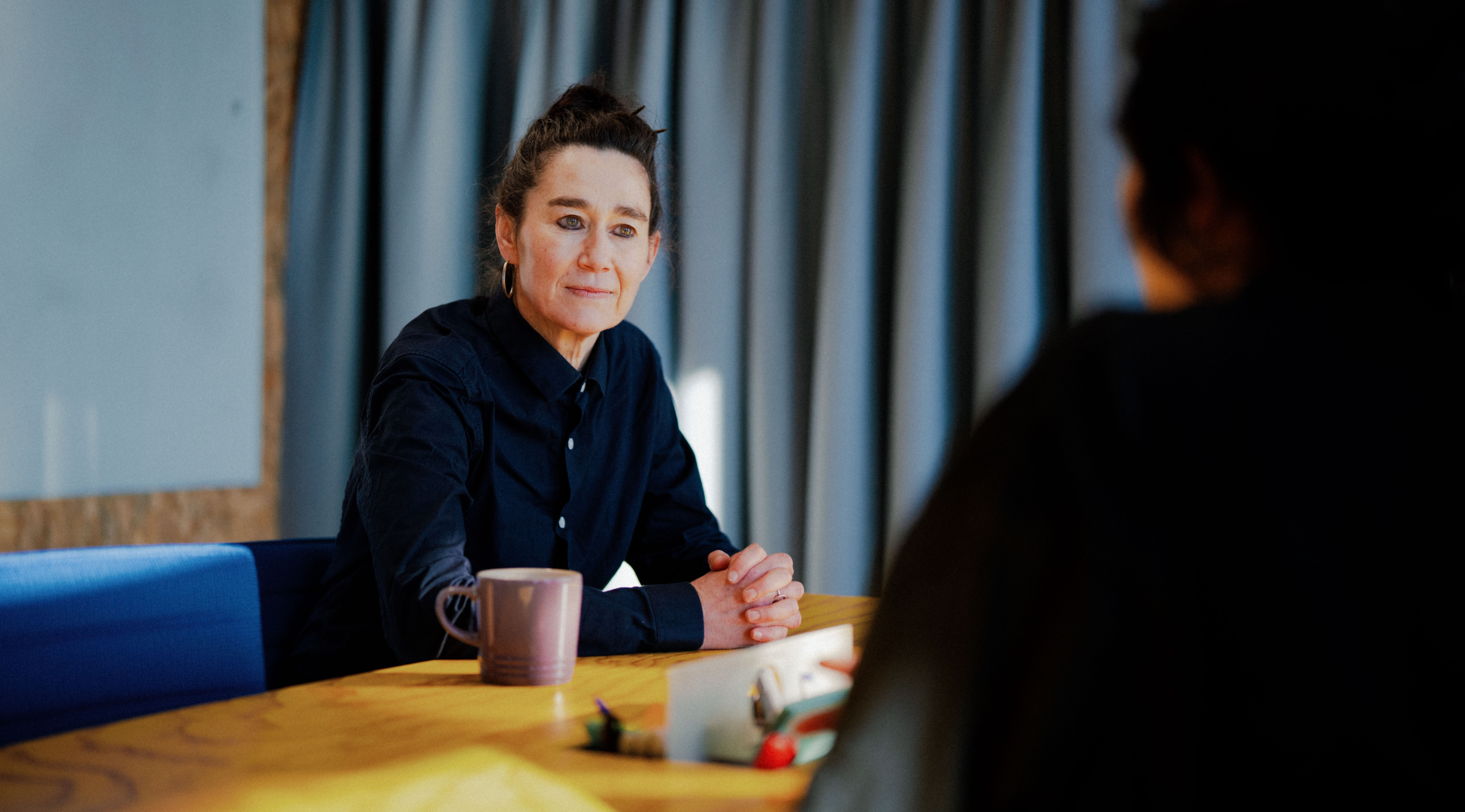
You’ve mentioned the advocacy work, which is so crucial to everything Switchboard does, alongside the range of services and supports that reach into specific intersections of community. Why is that combined approach essential to inclusion and to creating change?
One of the things we talk about at Switchboard is that we are by community, for community. There’s something incredible about having a team of LGBTIQA+ community members for whom this is personal. Sometimes that’s a challenge, but it’s personal for us; these are our lives and our communities, and people care deeply.
Every queer person’s experience is unique, and of course there are many differences among individual lives and across different parts of our communities—but there’s also a through-line that connects us. For many people who access our services, they speak of a felt sense of something that’s profoundly different from accessing a mainstream service: a sense of realising they're not arming themselves in preparation for explicit or implicit discrimination, a lack of understanding, or judgment. People can actually breathe out.
Can I tell you a beautiful story? I went to a regional Pride gala a couple of weeks ago and met an older couple in their sixties who’d been married for over thirty years. About five years ago, one of the partners came out as trans, and has since affirmed her gender—they’re now living as two women in a relationship in their regional community. I was speaking with the cis woman at the event, and she told me she feels completely different in LGBTIQA+ spaces ( compared to mainstream spaces )–in safe spaces she’s not constantly scanning the environment and the people around them to make sure no one’s being horrible to her partner. This is one small example of the difference our work can make.
Our Pride in Ageing program is another extraordinary example. We have workers embedded in four regional areas, connecting with older, often isolated members of the LGBTIQA+ community, and the stories are profound. A lot of our older community members have experienced stigmatisation and violence that was life-threatening—to be out in parts of Victoria in the 70s and 80s, you risked routine, severe violence and social exclusion. People tell us this experience of connection has been life-changing for them, to meet other older queer people and feel accepted.
You touched on the current climate. Can you speak to what you’re seeing in terms of violence and hate directed at LGBTIQA+ communities?
Politically, we’re seeing an increase in violence and hate directed at LGBTIQA+ communities, both internationally and here in Australia—particularly towards gay and bisexual men and trans women. We’re seeing levels of violence we haven’t seen since the 1980s, and that’s deeply confronting. We’ve made enormous progress over the last 40 years—marriage equality legislation, birth certificate reform and so much more—and yet we’re now seeing this resurgence of violence and hate, which is profoundly disturbing.
Switchboard recently made the opening submission to the Victorian Government’s inquiry into LGBTIQA+ hate crimes, which was set up largely in response to a spate of attacks facilitated through dating and meet-up apps like Grindr. It was a huge privilege, and an immense responsibility to give evidence on behalf of community members and to represent the experiences that community members share with us.
One of the things I’m proudest of from my time as CEO is that, mid last year—we were hearing a lot about these targeted attacks, and I recognised that there was a support gap for victim-survivors of these hate crimes. Victoria Police were encouraging people to report the crimes, and Thorne Harbour Health was doing great public safety messaging and offering ongoing counselling, what we didn’t have was somewhere people could call anonymously for information and support. I thought: I’m the CEO of the only organisation in the state with an LGBTIQA+ helpline—we could provide that service! So we did. Within six weeks we’d set up a dedicated line through Rainbow Door, launched by former Premier Jacinta Allan, Commissioner Joe Ball, and the Minister for Equality, Vicki Ward. We’re providing a service where anyone affected by these targeted attacks—not just gay men, but trans women and others in the community—can call and get information, be believed, be supported, not be blamed, and get support around their rights and options: whether that’s reporting to police, medical care, legal referrals, or just someone to talk to.
A lot of the people targeted in these attacks aren’t out, and they’re fearful of reporting to police because they’re afraid of being outed, blamed or disbelieved. We know some of the biggest barriers to disclosing sexual violence or other attacks are fear of not being believed, fear of being blamed, and fear of losing control over who knows. Those barriers are immense. By setting up a helpline where we understand those barriers and won't do anything that makes things worse, it can be life-changing for people.
And I’ll say—I do push back on the shorthand people use for this. People talk about “the Grindr attacks” as if it's the app doing the harm, and I’m like: it’s not an app jumping out of someone’s phone and assaulting people. It’s people—primarily cis men—choosing to use an app as the means to facilitate acts of violence. I think naming where the responsibility actually sits is important. Let’s not hide behind an app.
it’s not an app jumping out of someone’s phone and assaulting people. It’s people—primarily cis men—choosing to use an app as the means to facilitate acts of violence. I think naming where the responsibility actually sits is important. Let’s not hide behind an app.
Jenna Tuke
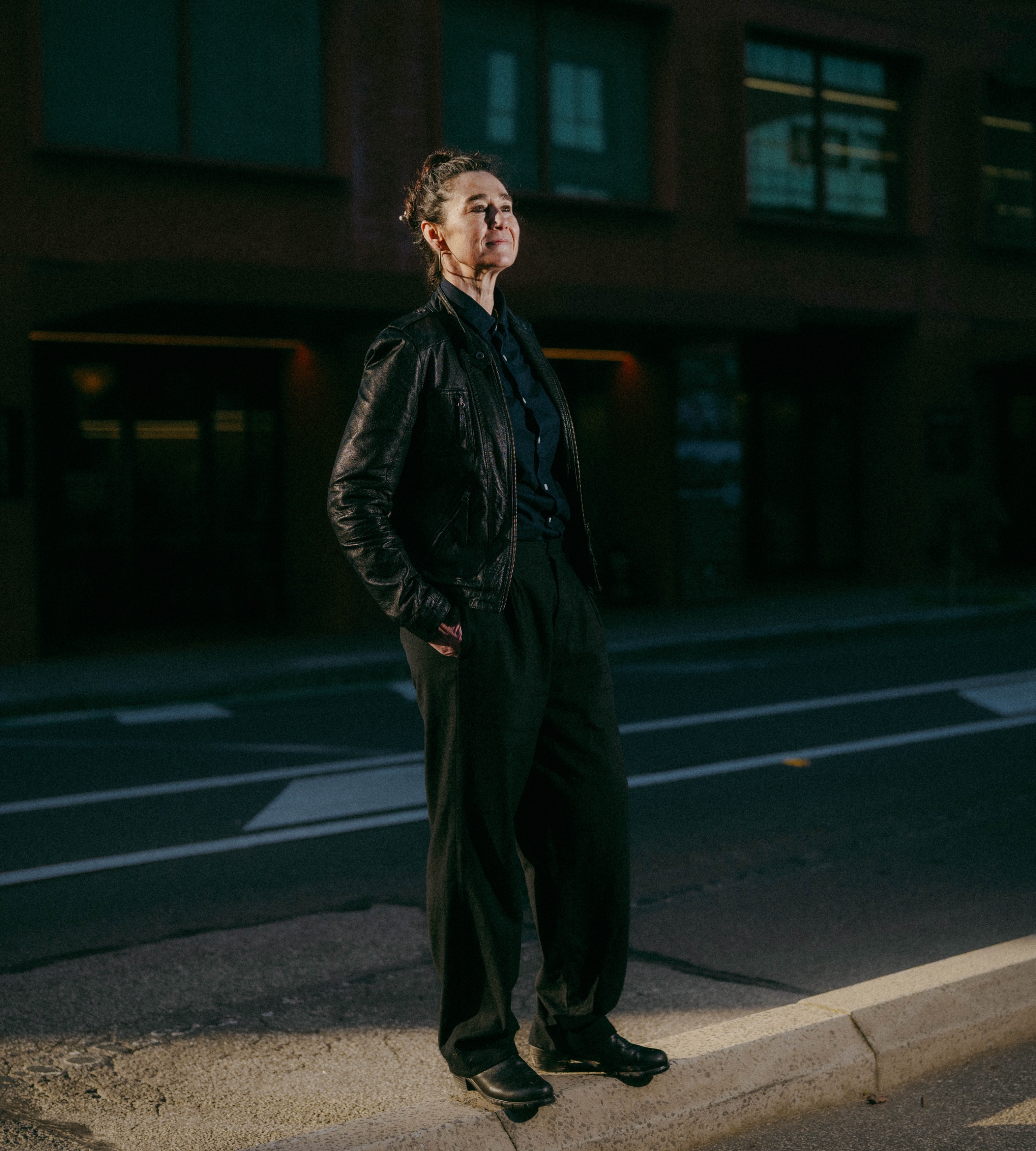
What drives you? Tell us about the fire in your belly to do this work each day.
The extraordinary commitment and fire of our staff and volunteers. They’re incredible. They work so hard, they’re so clever and creative, and so committed to community: to listening, to hearing, to responding. It’s a joy to work with them.
More broadly, I want to do something meaningful and purposeful with the skills I have. I want to use my power and privilege to do what I can. I’m a white, educated, cis person living in so-called Australia, and with that positionality comes privilege and power. I want to use that as a force for good. It might sound clichéd, but it’s true.
If you could change one thing about the world today for greater positive impact, what would it be?
I want to see safety for our communities that goes beyond just acceptance. I want to see a world where our communities are autonomous, can live free from anti-LGBTIQA+ hate, have our human rights upheld, and can make decisions about our own lives. I want our communities to feel safe participating fully in society—to love, express, and create—and for none of that to be controversial. It should just be.
I was walking with my dog this morning, thinking about this interview, and it struck me that modern life has a strange way of making us fearful and numb, focused only on survival and accumulation. There are so many invitations to live that way, and I refuse them. I’m committed to consistently refusing those invitations, and to fighting for lives that are safe, celebratory and connected. And when I talk about fighting for “life,” I'm also talking about the planet—we’re interconnected and interdependent.
I want to see safety for our communities that goes beyond just acceptance. I want to see a world where our communities are autonomous, can live free from anti-LGBTIQA+ hate, have our human rights upheld, and can make decisions about our own lives.
Jenna Tuke

Fear is an easy motivator, and an easy unifier, even when it’s wrong.
Jenna Tuke
Is there anything else you’d like to share or leave people with?
A queer intersectional framework recognises the power relations and relationships embedded in our systems and structures and how these power structures shape lives, opportunities, and a person’s experience of being in the world. Queer lives have often challenged the norm. We haven’t fitted the dominant paradigm; we haven’t seen ourselves in dominant ways of being, and we’ve had to break rules in order to survive. We have resisted, created, organised and celebrated—and this way of being, can be a gift to everyone. You don’t need to be queer to experience the joy and benefit of thinking outside the box.
The more diversity, colour and vibrancy we have in the world, the more beauty we have—and the deeper our capacity to take a stand and combat bigotry and hate. I think we’re seeing the far right very effectively speaking to people’s fear right now in the world: the fear that they don’t have enough, and that what they do have is being taken away by someone else. The far right offers people a very easy explanation for that—it’s the immigrants, it’s the gays, it’s the trans people getting special treatment, taking what’s mine—and it’s a lie. It’s actually untrue. Fear is an easy motivator, and an easy unifier, even when it’s wrong.