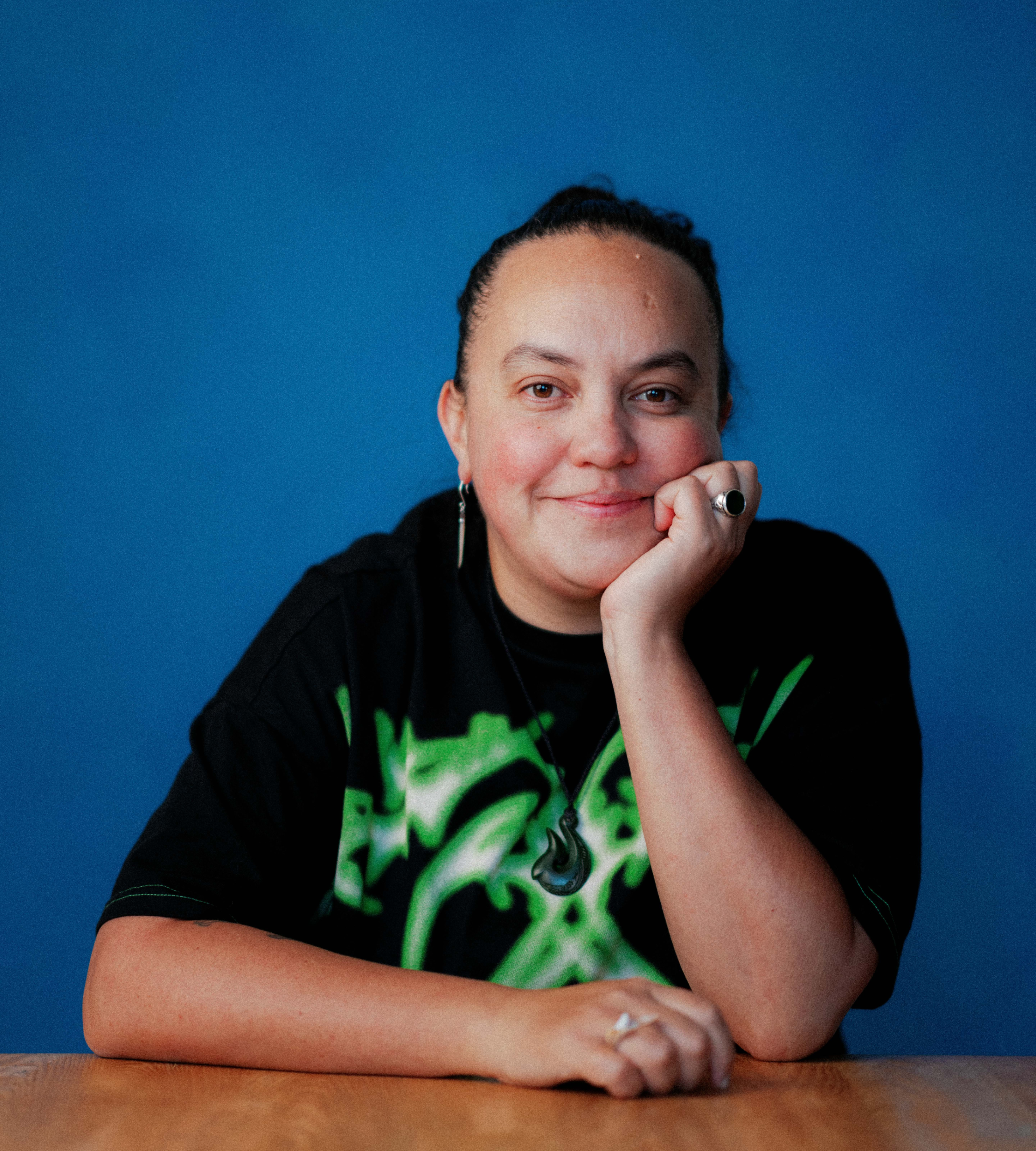
Te Raukura O’Connell Rapira doesn't do despair. As CEO of 350 Australia, they’re building climate campaigns on ancestral ground—literally: their approach traces back to Parihaka, a Taranaki village that met invading troops with bread, white feathers and song 160 years ago.
In this interview, Te Raukura unpacks why Indigenous-led land management outperforms every other model, what 34 organisations are doing together through the new Climate Justice Coalition, and why the antidote to a divided world is simple generosity—the kind Papatūānuku, Earth Mother, gives freely.
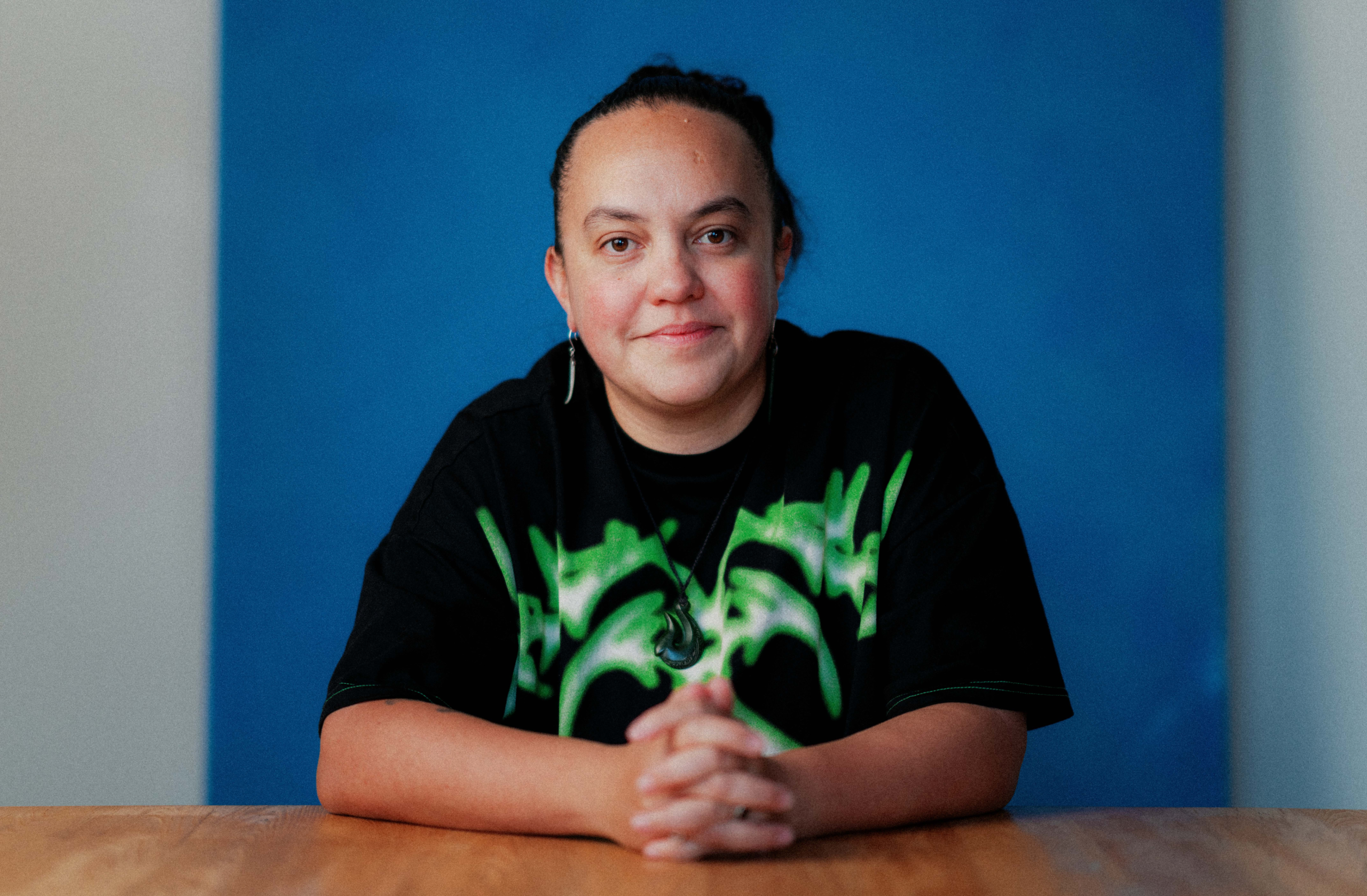
Te Raukura O’Connell Rapira, Māori and Irish community activist, strategist, and campaigner. Currently the CEO of 350 Australia (they/them/ia)
Kate Bensen, Head of Storytelling and Engagement at Today, (she/her)
Thanks for joining us today. Could we start with a little bit about you and what you do?
My name is Te Raukura and I am a mokopuna (grandchild, descendant) of Taranaki from the iwi (tribes) of Te Ātiawa and Ngāruahine. My mountain is Taranaki who we consider our grandfather, my river is Waitara and my marae (ancestral meeting house) is Owae. I also whakapapa (come from and belong) to Ngāpuhi, Te Rarawa, Ngāti Whakaue and County Kerry in Ireland. He takatāpui ahau. He takiwātanga au (I am queer and autistic).
I am currently the CEO of 350 Australia which is a small not-for-profit that dreams and organises for a future where First Nations lands and island homes are protected and returned, nature is allowed to flourish, wealth is shared and our energy is powered by the sun, water, wind and people.
I’m keen to hear your perspective on campaigning in the current political climate.
For tens of thousands of years, Aboriginal and Torres Strait Islanders have been the caretakers of their sacred lands and waters. Utilising knowledge that is passed down through generations, Indigenous people have long adhered to sophisticated systems of law, spirituality and science that centre reciprocity, responsibility and care for te taiao (the environment).
Here on this continent, there is no evidence of imperialism prior to the arrival of British colonialism which means that hundreds of Aboriginal nations designed and lived by systems and laws to live in right relationship with community and Country for at least 65,000 years. Our greatest opportunity in this political moment, and always, lies in learning from, and returning to, the values and systems that enabled this prosperity and relationality to occur.
Today, Indigenous people make up just 6% of the global population but thanks to these enduring systems—where we are in control of our own lands—biodiversity is better protected, old-growth forests are more likely to be preserved and water is cleaner. Here in Te Whenua Moemoeā (our word for this continent which means lands of the Dreaming), of the 1,500+ threatened species, 60% of the healthiest populations are found on Indigenous Lands. Preserving and protecting biodiversity is key to turning around the climate crisis as is protecting Indigenous people’s right to stay on their land and for their lands to be returned.
As the leader of a climate justice organisation, we recognise that the climate and biodiversity crisis is rooted in colonial capitalist systems and values that have separated people from each other and from the Earth. Our campaigning if it is to be truly restorative needs to guide people to return to each other and to the Earth.
Can you talk to your approach to strengths-based, non-violent activism?
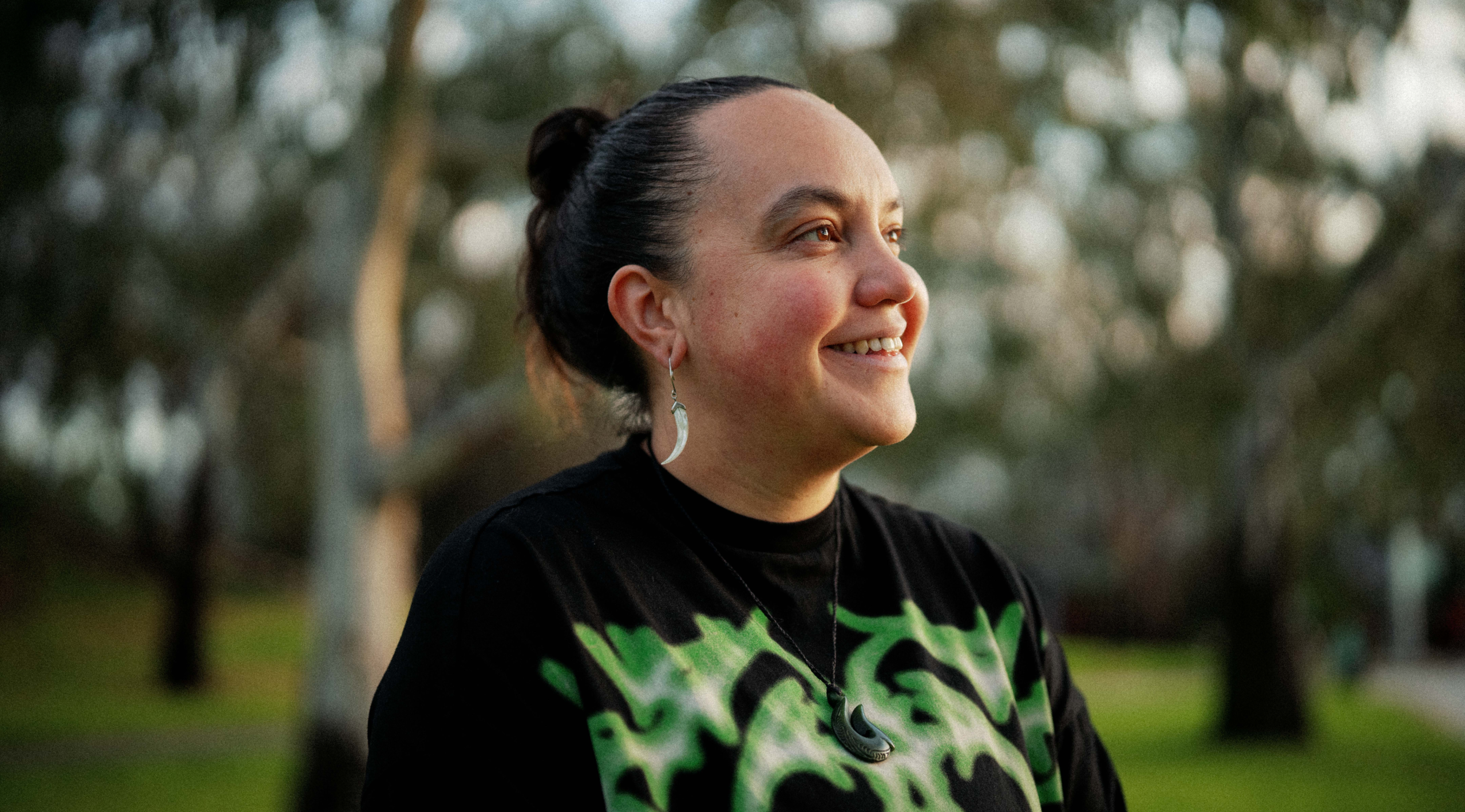
I am deeply inspired by my ancestors at Parihaka which has been a site of non-violent, strengths-based resistance for 160 years. Parihaka is a small village in South Taranaki which became a home to Māori who chose to resist the British Army’s war on us through non-violence. Māori from across different tribes of Aotearoa came to live in community, grow their own food and govern their own lives - as much as you can under attempted genocide and colonisation. Us gardening peacefully was seen as such a threat to the British attempts to demonise us as “savages” to justify stealing our land that in 1881, 1,600 militarised troops were sent in to forcibly remove our people. We knew this was coming and our people made a collective decision to meet this armed constabulary—the predecessors to the New Zealand police—with loaves of bread, bundles of white feathers and singing women and children. We said to this army of men, “you can share what we have but you cannot take it from us” which was both an assertion of sovereignty and a commitment to non-violence that I am proud to stand in the lineage and legacy of today. We call those feathers, ‘Te Raukura’ which is where my first name comes from.
What are you working on at the moment?
So many things! In January, our team concluded a comprehensive listening process with 28,000 people across Oceania which has given us a vision to work towards from here to 2050.
350 is the proud host of two First Nations-led climate and land justice campaigns: Our Islands, Our Home and Protect Larrakia Country. We also recently launched the Climate Justice Coalition which has 34 member organisations working together for a just transition from an economy built on fossil fuels towards a renewable energy revolution. Our local groups are selling out events on Data Centres in Melbourne, coordinating native tree planting programs, and working to keep South Australia’s food bowl frack free.
We’ve just adopted world-class organising tools to scale these efforts sustainably—taking inspiration from Zohran Mamdani’s mayoral campaign in New York—and launched two new programs building relationships of solidarity between First Nations, Pasifika, and Asian communities for climate solutions.
‘you can share what we have but you cannot take it from us’ which was both an assertion of sovereignty and a commitment to non-violence that I am proud to stand in the lineage and legacy of today. We call those feathers, ‘Te Raukura’ which is where my first name comes from.
Te Raukura O'Connell Rapira
What values guide you?
My work is rooted in the following Māori values:
Kotahitanga: Working together, unity, collectivity, solidarity
Manaakitanga: The act of caring deeply about, and for, other people
Kaitiakitanga: Responsible and reciprocal guardianship of land, sea, skies, water, wildlife
Tino Rangatiratanga: Self-determination and Indigenous sovereignty
Wairuatanga: Tending to the sacred and the spiritual
What can people do today, to make change tomorrow? Or what needs to change today, to make a difference to the world tomorrow?
At 350 Australia, we believe that movements find their power when people of different backgrounds, experiences and perspectives can bring their hopes, dreams, strengths and skills to a collective vision and strategy.
People are actually extraordinary and everyone has gifts they can channel towards making the world a better place. Our movements need people who can cook, paint, organise communities, imagine new futures, care for the children, care for the Elders, ensure access for disabled and Deaf folk, plant native trees and shrubs, teach the next generation, meet with politicians, send emails, sign petitions, volunteer for charity, door knock for policies and parties that put people and planet first, film videos, make content, have conversations with family and friends—we need all of it. The key is we need to find ways to do it together and ways to stay in our togetherness when times get tough.
There are a lot of attempts to divide us along class, race, gender, and identity lines by those who seek to maintain an unfair status quo where most of the world’s resources are concentrated among a small group of billionaires while the rest of us struggle to make ends meet. We need to see that strategy and tactic for what it is and stay deeply rooted in the kind of generosity that we experience from nature, land and water. Papatūānuku gives life so freely and so abundantly and we could all do with embodying that essence and giving freely and abundantly back.