One in 40 Australians are autistic. Yet most businesses still don’t know where to start when it comes to inclusion. Julie Nestor, Mastercard’s Executive Vice President of Marketing and Communications for Asia Pacific, is working to change that—and she's doing it from the ground up, with community at the centre. “If you never start, it never happens,” she says.
This is the story of how Acceptance Matters is moving from awareness to action.
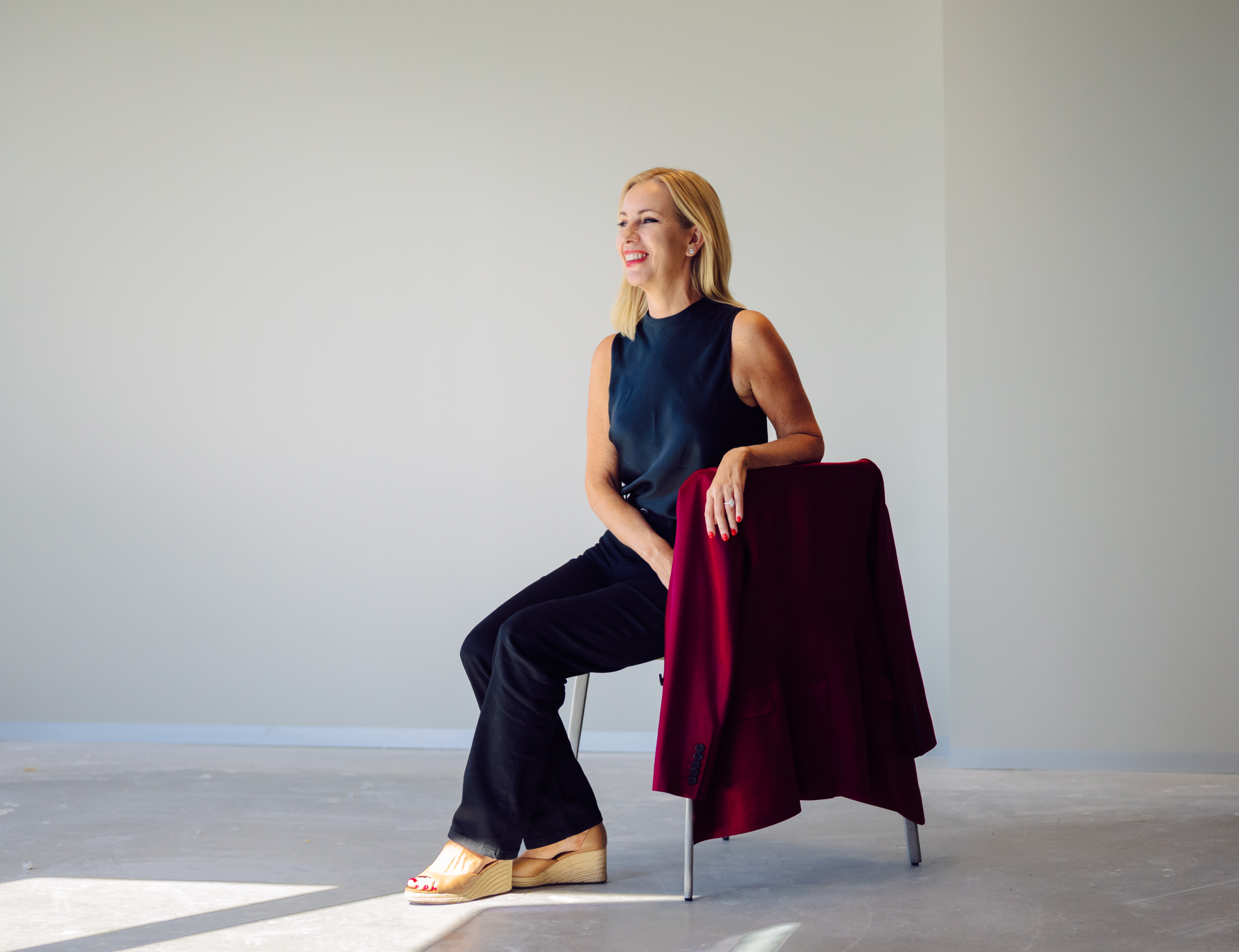
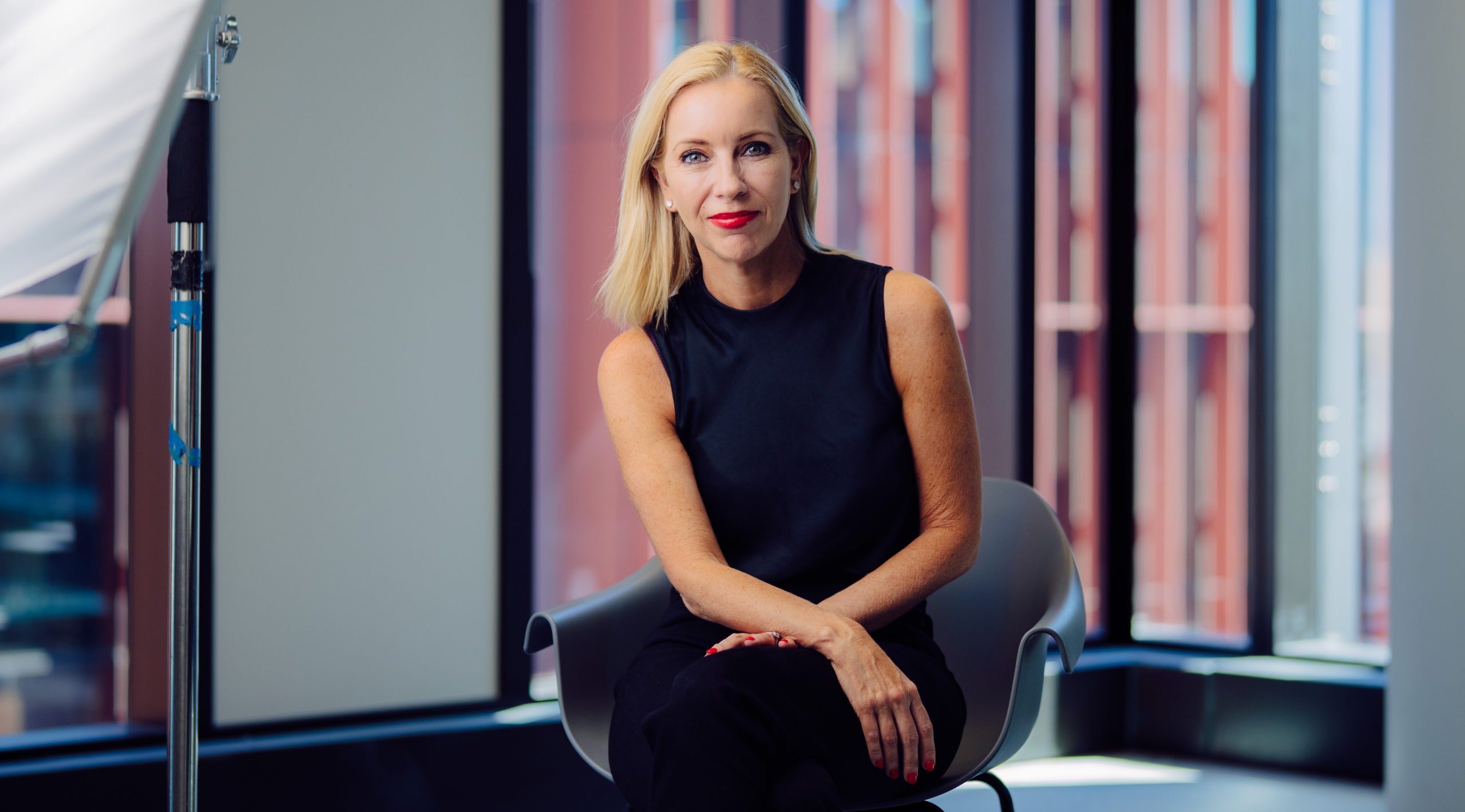
Julie Nestor, Executive Vice President, Marketing and Communications, Asia Pacific, she/her
Mark Davis, National Partnerships Director, Today, he/him
Hello Julie, lovely to have you in here today. Maybe you can start by introducing yourself—who you are and what we’re doing here.
Thanks for having me. I’m Julie Nestor, I look after marketing and communications for Mastercard across Asia Pacific. I’m an Aussie, but I'm based in Singapore, where I’ve been for about seven years. It's great to be in your office and have a chat.
Lovely to have you here. We’re here to talk about our Acceptance Matters initiative—something that’s moved a little bit from Singapore to Australia recently, through our work around the Australian Open, and with a bit more longevity behind it now. Do you want to talk to me about Acceptance Matters as it was in Singapore and what we’re doing here?
Absolutely. Maybe even taking a step further back to explain why Mastercard is doing anything in the space of inclusion—large companies often have a philanthropic arm or a D&I-focussed part of their organisation, but at Mastercard, we actually believe that profit and purpose go together. We feel it’s our responsibility to bring everybody into the financial and digital ecosystems across the globe.
Doing well by doing good has been something we’ve been working at as a company for quite a long time, but more recently in Asia Pacific we’ve focused a lot on inclusion for people with disabilities—often an overlooked and very large segment of the community. Whether it’s our products or our partnerships with banks, we want to make sure that everyone can access Mastercard.
So we started doing product design for different community segments that maybe hadn’t been thought about as much in the financial services space. One of the first things we did was develop a product called the Touch Card—simply taking a standard credit, debit, or prepaid card and creating it for all people. If you think about someone with vision impairment, they can’t differentiate their cards in their wallet—their credit card from their debit card, everything feels the same. A simple design change of putting notches in the side of the card allows them to feel the difference without having to ask someone for help.
The Touch Card was probably one of the first things we did around product design for inclusion, and we’ve launched it with our banking partners globally with great success. But one thing we’ve found with innovation is that you create something and people don’t necessarily understand why it was done that way. I remember talking to a friend who pulled out her card to pay for lunch, and I said, “Oh wow, you’ve got the Touch Card.” She said, “What do you mean? It’s just a Westpac Mastercard.” I said, “Don’t you think about those notches in the side?” And she said, “I thought it was just a cool design.” She was really blown away when I explained why we designed it that way and who we designed it for.
That made me realise that a lot of the great work we do just needs to be amplified—we have to find ways to communicate effectively with consumers about what that work is really about.
With our focus on inclusion for people with disabilities, we wanted to think about what we could do to support the neurodiverse community. We started that in Singapore, and we were originally planning to create some kind of hub or digital tool that would let carers and autistic people know which businesses might support them in different ways.
As we started thinking it through, we worked with community groups to get their feedback—particularly with a school in Singapore that supports autistic people. And they said, “What you’re trying to do is great, but Singapore isn’t even ready to talk about autism yet. There’s still a lot of stigma, and most carers and parents won’t even take their child out of the house to go to these businesses.” As an Australian who has lived in both countries, I was quite taken aback by that.
So Acceptance Matters became an initiative to drive awareness about neurodiversity. The simple goal was to tell the stories of people living in Singapore who are on the autism spectrum, the challenges they face, and to ask the community to be more empathetic, more supportive—to create acceptance. It was about awareness into acceptance. And we were able to get other large business partners involved, because we wanted this to be broader than just Mastercard.
Then we started thinking about Australia, which is quite different. That awareness is already there, and you could argue acceptance is further along too—certainly a lot further than Singapore. So when we thought about Australia, we felt it needed to be more about action. And in partnership with your team and with community advocates and community members themselves, that digital tool we’d originally wanted to build in Singapore felt a lot more relevant here.
There are still a lot of spaces that aren’t designed with all people in mind, but there are many businesses that do want to do the right thing —they want to train their staff, they want to know how to support people differently, they just don’t know where to start. So the idea we went with—and that your team designed—was the Inclusion Hub: a space for businesses to register their interest in becoming a more inclusive space, and then work through a range of different actions available through the hub’s content.
Those actions might include signing up for staff training, creating calm hours, making physical and sensory changes to their spaces—lighting, layout, and so on. There are about 24 or 25 different actions on the Inclusion Hub that a business can look at and think, what’s right for me?
This is the first stage. Get businesses involved first. Once we have good scale and relevance, we’d want to move into something more consumer-facing—a directory where people can go and see that this restaurant has inclusive menus with photos of how food is prepared, or that this retailer offers different opening hours and supports neurodiverse customers differently. That’s where we hope to get to. But the Inclusion Hub today is designed for businesses to get started and make some change. It’s also a great thing for staff—knowing their employer is pushing for these inclusion measures will drive a lot of engagement internally too.
Those actions might include signing up for staff training, creating calm hours, making physical and sensory changes to their spaces—lighting, layout, and so on. There are about 24 or 25 different actions on the Inclusion Hub that a business can look at and think, what’s right for me?
Julie Nestor
One of the things that was really exciting for us was Mastercard’s—not just willingness—almost insistence on engaging with the community to do the work. It wasn’t a “lean in and tell you how to do it”, it was “let's talk to the right people.” Those two dozen or so points in the Inclusion Hub are evidence-based, research-backed, with academic rigour as well as community involvement. Was that unusual for you, or was it an important part of the process?
Everything we’ve done—whether it's a product like the Touch Card or any of the other initiatives we’ve done in the inclusion space—has always been co-designed with community. Because none of us are experts. This is a topic I have some fairly deep personal knowledge in as a mother of an autistic child, but I’m also very aware that you can’t design for everyone. So it’s really important that we ask community members: is this even a problem for you?
Take the sensory menu, for example. We thought it was a really nice idea, but we needed to test that. We were thinking about the challenges many autistic people face when going out to eat compared to what a neurotypical person might find exciting. Not knowing exactly what will turn up on their plate can create real anxiety for some people. It’s not just the ambience and sensory components of the restaurant, the noise and the lighting, but also things like food touching other food, or certain colours of food, or textures, or temperature.
So we thought: wouldn’t it be great if, in the same way wine is described on a menu, you could do that with food too? Instead of just one line about what you’re going to get, actually talk about the ingredients, how they’ll be presented, and ideally show a visual. We call them sensory menus—designed by the chef to give full detail on the ingredients, textures, taste, and presentation, so people can have a lot more clarity on what they’re going to receive. They can look it up a week out and know whether it’s a place they want to go.
And what’s interesting is that when we engaged with chefs around this, we expected it would be a heavy lift. But they said, “No, because when we’re designing our menus, we do this work anyway—we just haven’t been presenting it back out or being transparent about what’s already been done.”
We launched the sensory menu with the Mulberry Group here in Melbourne in January, and also at the Australian Open with two vendors—using a QR code so people in the queue can read the information before they order.
So we thought: wouldn’t it be great if, in the same way wine is described on a menu, you could do that with food too? Instead of just one line about what you’re going to get, actually talk about the ingredients, how they’ll be presented, and ideally show a visual. We call them sensory menus—designed by the chef to give full detail on the ingredients, textures, taste, and presentation, so people can have a lot more clarity on what they’re going to receive. They can look it up a week out and know whether it’s a place they want to go.
Julie Nestor
There’s a real functional shift there, back to your earlier point—what might be a delight for a neurotypical person can actually be unsettling for a neurodiverse person. It’s a small but genuinely meaningful step towards inclusion.
Exactly, and it’s something I really want to see everywhere—restaurants, fast food providers, all of it. That’s one of the things featured on the Inclusion Hub: how to create a sensory menu.
Fantastic. And as someone with a bit of skin in the game as a father of an autistic child, one of the things we heard throughout this project was the classic: if you’ve met one autistic person, you’ve met one autistic person. Which makes product design really hard—you can’t just say, “this is for the 18 to 25-year-old demographic.” So is the solution just to go wider? More engagement? How do you think that gets tackled?
It’s tricky. We don’t have all the answers or a perfect solution by any means. But I feel like, particularly in product design and marketing, sometimes if something feels too hard or too complex, no one even gives it a go. Like, “I can’t solve for every situation, the scope”s too big”—or “is neurodiversity too narrow, should we be focusing on all disabilities?” There’s no right or wrong, but if you never start, it never happens.
Our view is: let’s create something with broad use cases—something relevant to a retailer, a theatre, a restaurant, a hairdresser. And we’re not mandating what a business must do. Here are some small adjustments that could really welcome people in a different way, and ultimately that’s what makes good business sense. One in 40 Australians are autistic—that’s around 800,000 people, a pretty large community group that isn’t being properly supported. So hopefully this will drive scale, because if only a few businesses are involved, it’s not going to give the community what they need.
You’ve touched on theatres, hairdressers, cafes—all things that have been real challenges in our life. My oldest is 16 now, but I remember a hairdresser who used to put a weighted blanket over him to help him sit, a café where the burger came on different coloured bread and it wouldn’t be touched, a theatre where he couldn’t sit still and just wanted to walk in circles. They’re all things where small tweaks make a real difference. It’s not boiling the ocean, and it’s not a binary solution. A theatre where it’s okay to walk around—that one thing alone makes such a big difference.
100%. And not speaking on behalf of everyone in the community, but speaking as a parent of an autistic child—the best way a business can support my son is just by being trained and being welcoming. If he does something a little bit different in that space, they’re not staring or overreacting. He gets a smile. That creates calmness immediately. It’s one thing, but it makes a huge difference. There’s a real cultural shift involved, and it comes back to acceptance—just letting us feel welcome here.
So, looking forward to the idea of a consumer directory as the next goal. Getting enough businesses and enough change happening so that people like you and I can look it up, use it as a planning tool—so my son can map a path into the city that works for him. Does that feel right?
Absolutely. There are so many ways it could be developed. Even the social story idea—you’ll probably appreciate this after 16 years with your son. Trying to prepare a child or yourself for an experience you’re not familiar with is so outdated the way we do it now. Parents are putting together PowerPoints, finding Google images of what an airport looks like, how you’ll get there, what will happen when you arrive. A social story can take two hours to prepare, and then everything changes—the person meeting you is wearing a blue hat instead of a red one, the check-in is automated, the pilot isn’t where you expected.
Finding a way—maybe through AI—to make that process simpler, to help map out a journey, I think AI is going to bring some incredible opportunities around inclusion, and I’m excited to see what we can leverage for that.
We want to be continually focusing on this, continuing to innovate and evolve. But we’re only one organisation, so I’m appealing to other organisations to come on board and help get this scaled. Then we can turn our attention to how we evolve it—and to other disabilities and community groups that also need support.
It’s a special piece of work—someone of influence, an innovation-led organisation, activating locally with community while thinking big picture. We’re very excited.
Thank you. And thank you for designing it.
We want to be continually focusing on this, continuing to innovate and evolve. But we’re only one organisation, so I’m appealing to other organisations to come on board and help get this scaled. Then we can turn our attention to how we evolve it—and to other disabilities and community groups that also need support.
Julie Nestor